


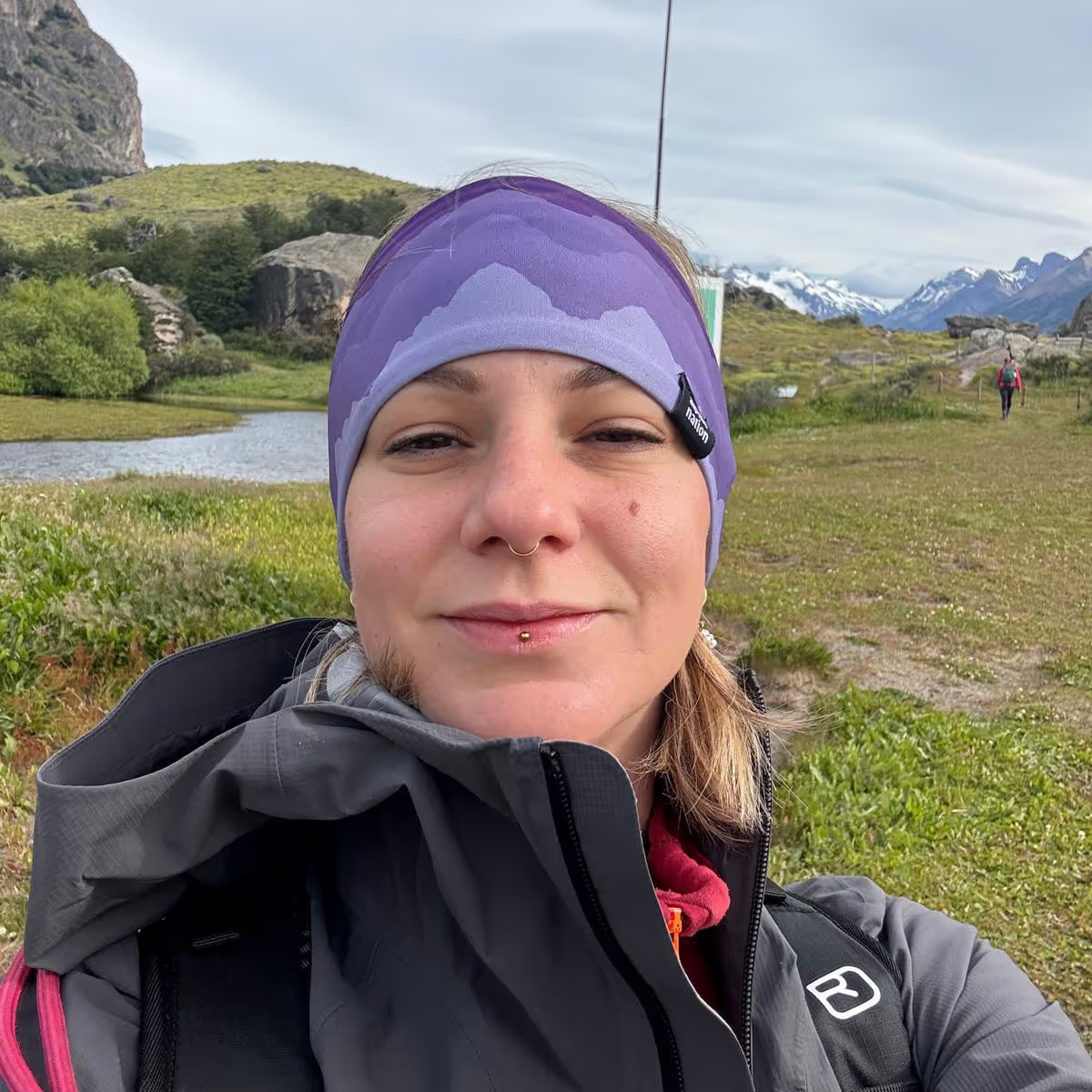
Let me tell you a short story. It was 2017 when Tjaž and Petra came to Bovec for a trip—just like you might be planning now. At that time, we were all about the ocean, diving, and beach sunsets. But this time, we planned the whole trip around one thing: canyoning in Fratarica canyon in Bovec. And that one day changed everything. After the trip, a part of us stayed here. And honestly, this canyon is one of the main reasons why we never really left.
Not convinced yet? Let’s take a closer look at what canyoning actually is, what makes Fratarica special, and if it’s the right fit for you.
What is canyoning?
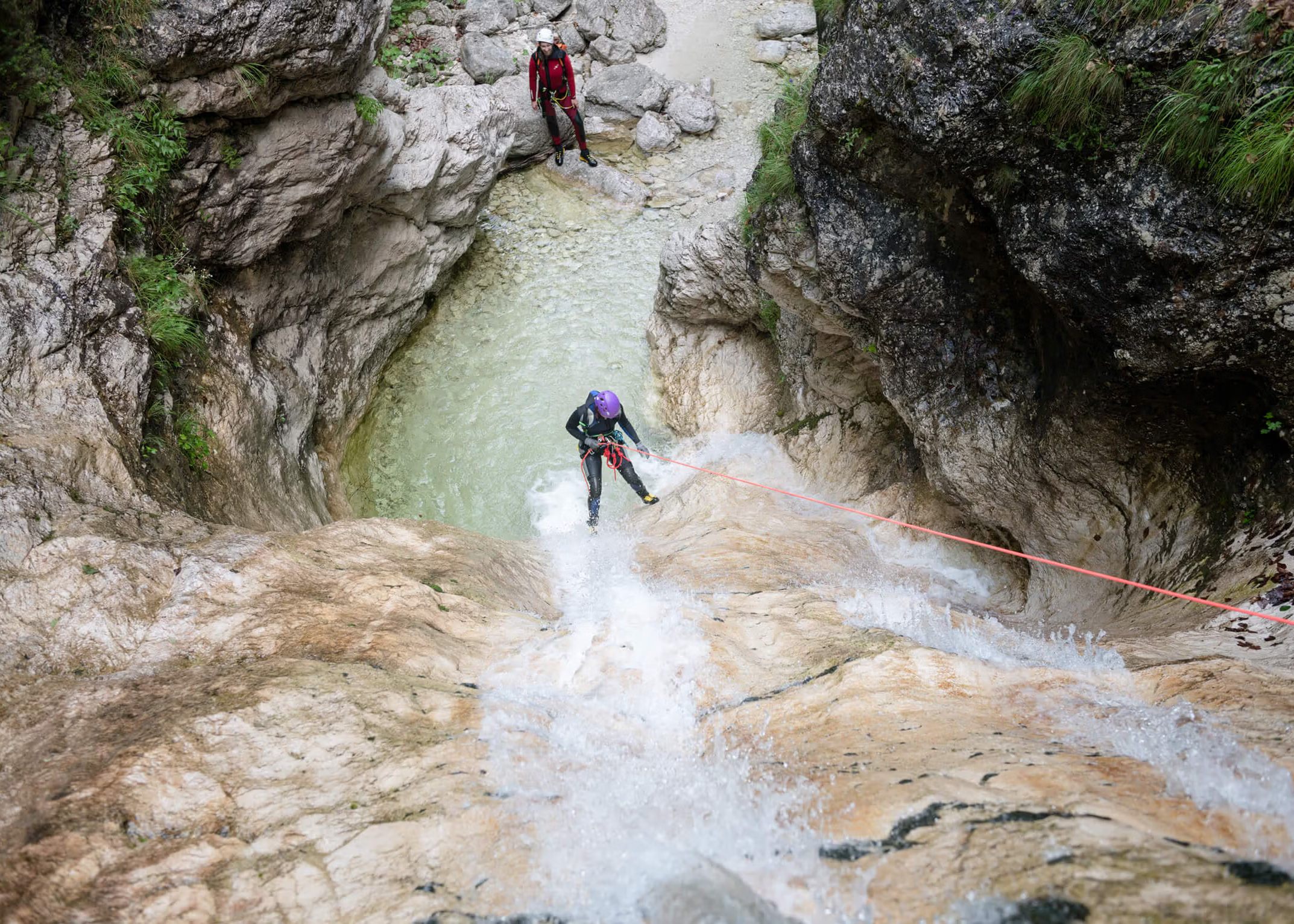
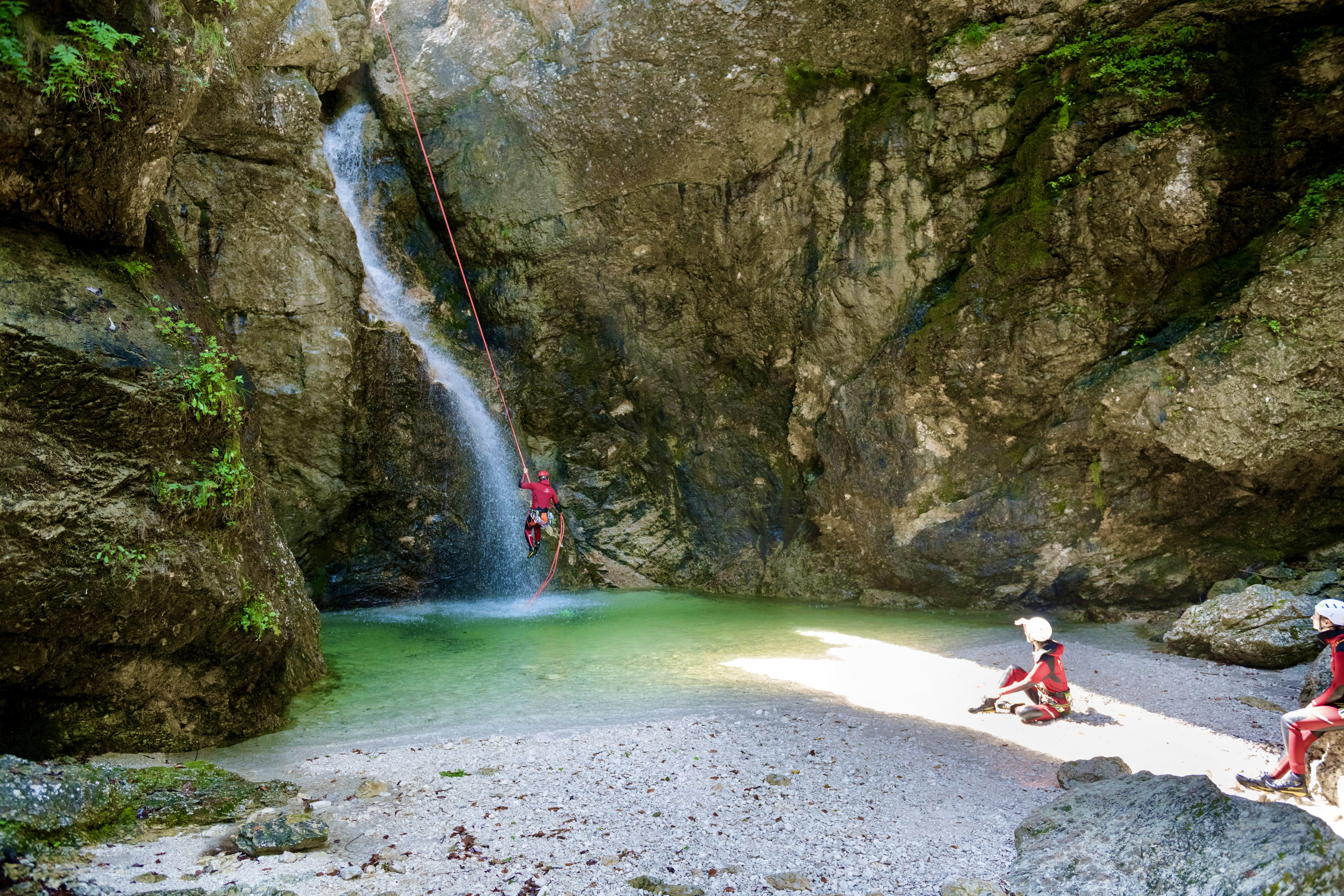
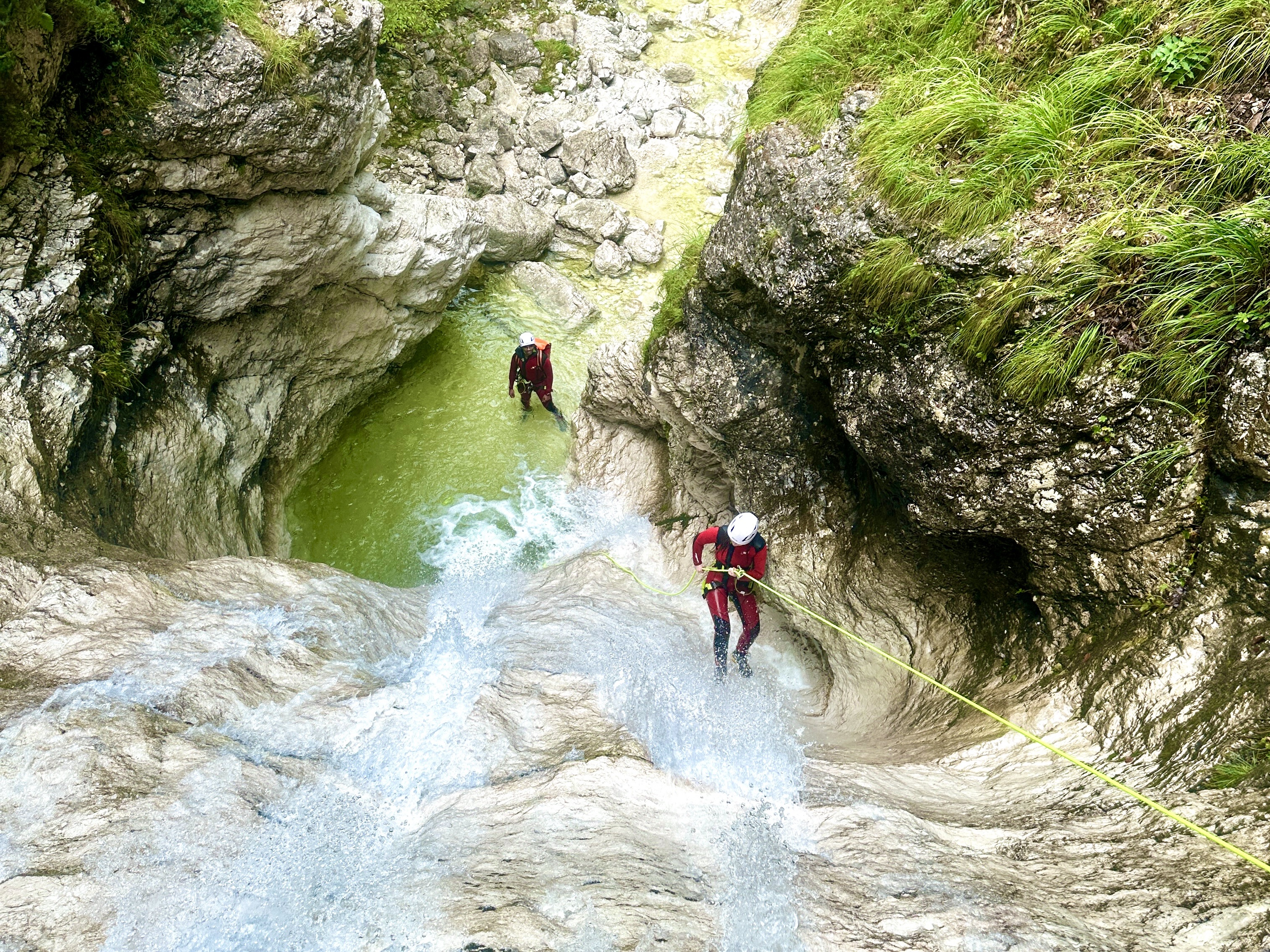
Canyoning takes you into the heart of the mountain—following a natural stream through narrow gorges shaped over centuries by water. You move through the canyon by walking, sliding, swimming, jumping, and descending waterfalls with a rope. Equipped with a neoprene suit, helmet, and harness, you’re guided step by step through the terrain. Some parts are simple and flow naturally—walking over rocks, sliding down smooth sections, or stepping into clear pools. Other parts involve rope work, where you’re lowered down waterfalls in a controlled way.
What makes a canyon “technical”?
This is where the biggest difference between beginner and more advanced canyons comes in. In beginner-friendly canyons like Fratarica, waterfalls are shaped in a way that makes movement straightforward. The rock is more even, the lines are clear, and the descent feels natural. In more technical canyons, the terrain becomes less forgiving. You might deal with uneven rock, large boulders, or sections where you need to carefully find your path. Anchors for the rope can be harder to access or require more complex setups, and stronger water flow means you’re managing pressure while moving.
In simple terms: technical waterfalls require more precision and experience. In Fratarica, the focus is on learning and enjoying the movement—not figuring out how to get down.
Where is Fratarica canyon?
Fratarica is located in Triglav National Park, above the village of Log pod Mangartom, in the valley of the Koritnica River—often called the valley of a hundred waterfalls. The stream flows down from below the massive Loška Stena and the Mangart range, creating a series of waterfalls of all shapes and sizes.
The approach already sets the tone. You hike through alpine terrain, occasionally catching glimpses of the creek below. And then you see it—the 50-meter Parabola waterfall. That’s usually the moment expectations shift.
Why is Fratarica our most popular canyon?
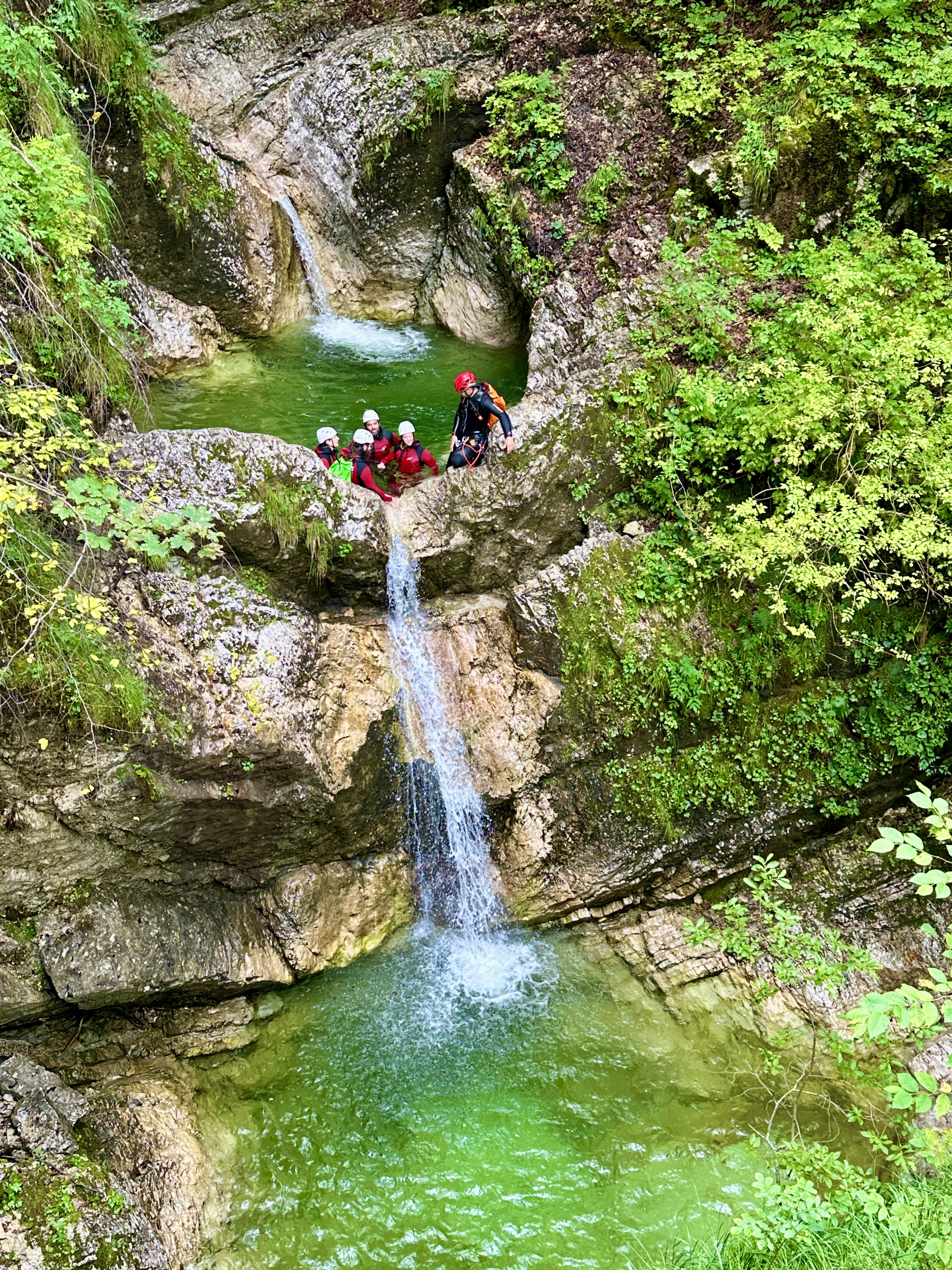
Because it gets the balance right. It feels big, wild, and impressive—but at the same time, it’s very accessible. One of the key reasons is the shape of the waterfalls. In Fratarica, the rock is mostly smooth and the slopes are steady. You’re not dealing with unstable footing, hidden holes, or large boulders where you need to search for your next step. The lines are clean and predictable, which makes moving through the canyon feel natural. Even when using ropes, the descent is controlled and straightforward. You’re not fighting the terrain or the water—you’re working with it. At the same time, it still gives you the full canyoning experience. You descend proper waterfalls, move through both open and enclosed sections, and gradually build confidence as the canyon progresses.
Another important point is flexibility. Even though parts of Fratarica are enclosed, there are several safe exit points along the way. That makes people feel more comfortable, especially on their first canyoning trip. The approach is also not exposed, so you don’t start the day already dealing with heights. And then there’s the variety. You don’t just do one thing. You walk, slide, jump, and abseil. The canyon keeps changing—wide sections, narrow passages, higher walls, open views. It never feels repetitive.
Who is this canyon suitable for?
Canyoning in Fratarica is a great fit for adults and teenagers. With teenagers, it’s worth thinking about what they actually want. If they’re more into simple fun—slides and small jumps—an easier canyon like Sušec might be a better choice. But if they’re curious about rope work and want a more complete canyoning experience, Fratarica is often the right fit.
It’s important that participants can swim and feel comfortable putting their head under water. You don’t need to be an athlete, but a normal level of fitness helps, as you’ll be moving on uneven terrain and spending a few hours in the canyon.
What to expect on the trip
The trip starts with about a 40-minute uphill hike. You’ll do this in your swimsuit, carrying your neoprene suit, as it’s too warm to hike in it. At the top, your guide explains everything you need to know—how to move in the canyon, how to slide, how to jump, and how to walk safely on wet rock. Once you’re ready, you put on the neoprene and start. The beginning is gentle. You walk through rocky sections, try your first small slide, and soon reach your first rappel—around 12 meters. From there, the canyon builds up naturally. A few more slides and waterfalls, up to around 5 meters, help you get comfortable.
Then comes the highlight—the 50-meter Parabola waterfall. Before going down, everything is explained again, and you’re safely lowered down the waterfall. After that, a short hike brings you to the 20-meter Cathedral waterfall—one of the most dramatic parts of the canyon. The final section becomes more enclosed, with walls rising high above you and several more waterfalls to descend, slide, or jump. A short downclimb brings you to the exit. The whole experience takes around 4 hours.
So why Fratarica?
Because it’s not just about one big waterfall. It’s the feeling of moving through something real. Learning step by step. Being surrounded by rock, water, and alpine nature that constantly changes around you. For us, it started with one canyon. And somehow, it never really ended there.
This post was written by Petra, not AI.


